It's the question sitting in the back of every mind in the Indian engineering ecosystem — and one few were willing to ask plainly. It's also the question Provio was partly built to answer.
What the Data Shows
Across Profile Scores in the Provio candidate base, the distribution by institution should give both students and companies pause: the correlation between institution tier and average Profile Score is nowhere near as high as people assume — and far weaker than the correlation between verified domain output and Profile Score.
In other words: where you studied is not the best predictor of a high Profile Score. How far you've actually gone — and how clearly you can show it — is.
That doesn't mean institutional quality is meaningless. It is real. But it's an input into learning, not a direct measure of ability — and the gap between top tier-2 students and average IITians is much smaller than Indian recruiting decisions have historically suggested.
Where the IIT/NIT Brand Still Matters
Honestly, institutional brand still carries weight in parts of the hiring market:
Large product companies & MNCs
Infosys, Wipro, and TCS still apply CGPA and institution filters in their campus pipelines. Those filters aren't going away soon.
Early-stage interviewing without verification
Recruiters who lack any verification infrastructure use institution as a proxy for likely competence. Without something like Provio, that bias compounds.
Founder & CXO perception
At the C-suite level, IIT brand still carries social signal — in investor conversations and in some senior hiring decisions.
Where It Does Not Matter (And Should Not)
Startups under 200 employees — where most of the interesting engineering work in India is happening — care more about proven output than institutional reputation. Talk to engineering managers at these companies and the pattern repeats: a tier-2 candidate with documented open-source contributions, who can articulate their technical choices and has shipped something real, will beat an IIT candidate with an unbroken CGPA but a blank portfolio.
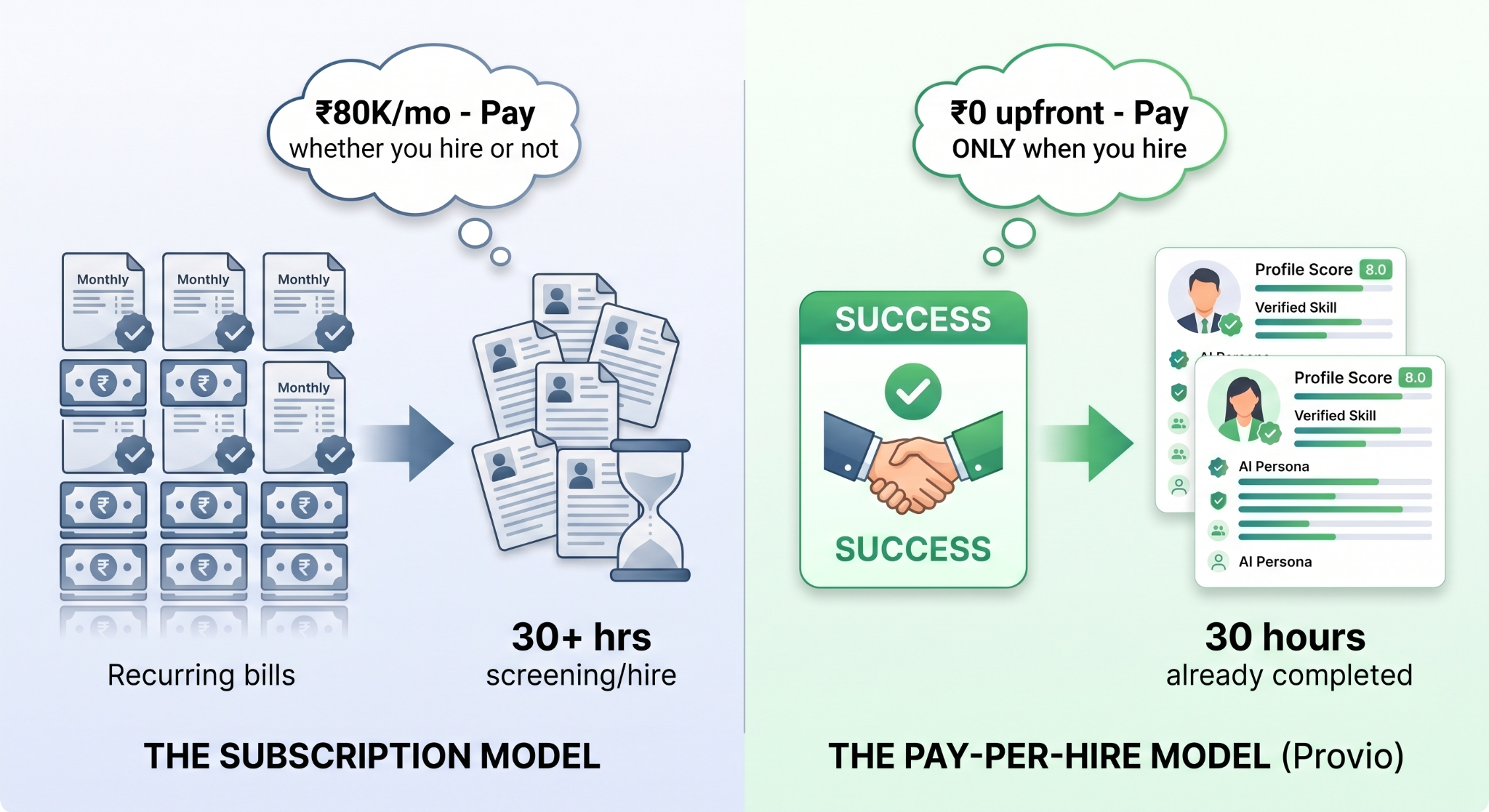
The problem is that without a verification layer, even those engineering managers see two unverified resumes and have no way to separate signal from credential.
Verification doesn't erase institutional advantage. It forces the market to face what that advantage actually was — and was not.
What Provio's Verification Does for Tier-2 Students
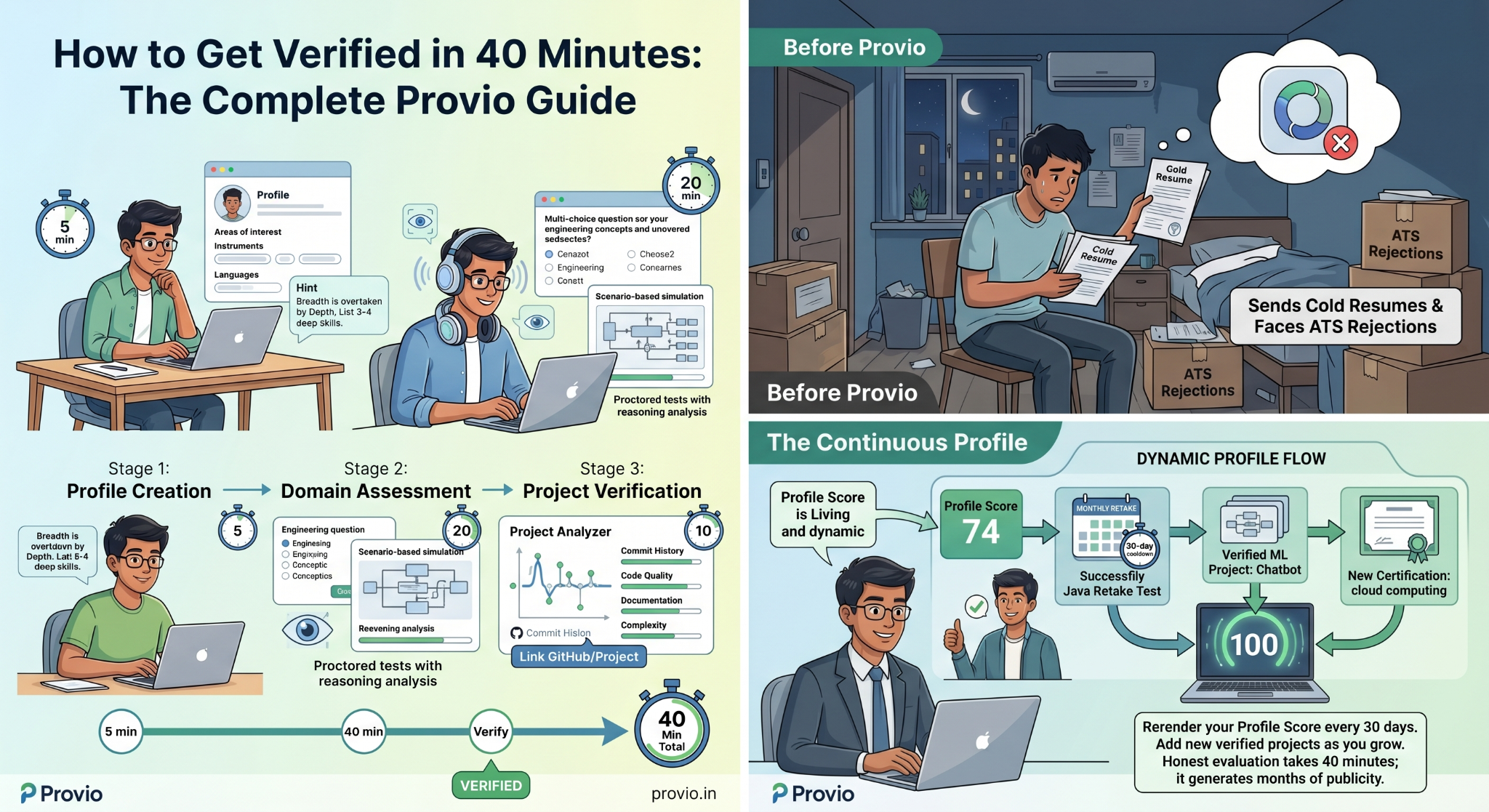
Verification is the single strongest lever a tier-2 student with real depth has. Your Profile Score is institution-neutral by design. An 82 from NIT Surathkal and an 82 from a private university in Lucknow look identical on a company dashboard — and equally credible.
That creates a route that didn't exist before: a student who built something real at a college no recruiter has heard of becomes visible on merit. Rebuilding the truth infrastructure means credential gives way to evidence.
What IIT/NIT Students Get From Verification
For IIT and NIT students, verification is a floor protector. With the brand getting less exceptional in a market producing 500+ engineers per institute — not all of them outliers — a high Profile Score is what tells the market you aren't coasting on the institute name. It separates the IITian who built things from the one who got in and stopped pushing.
The summary: your college is more or less than you think if you're at a tier-2 school, and better or worse than you'd like if you're at a tier-1 one. What fills that gap is verified output. That's what Provio measures.
Get verified. Let your work speak for your college. → provio.in
Written by
Provio Team
We write about verification, AI hiring, and the future of work in India. Our goal: give founders and candidates the signal they need — no noise.
More Articles