You have been lied to. Not by a single candidate — but by the system you depended upon to get you a good one.
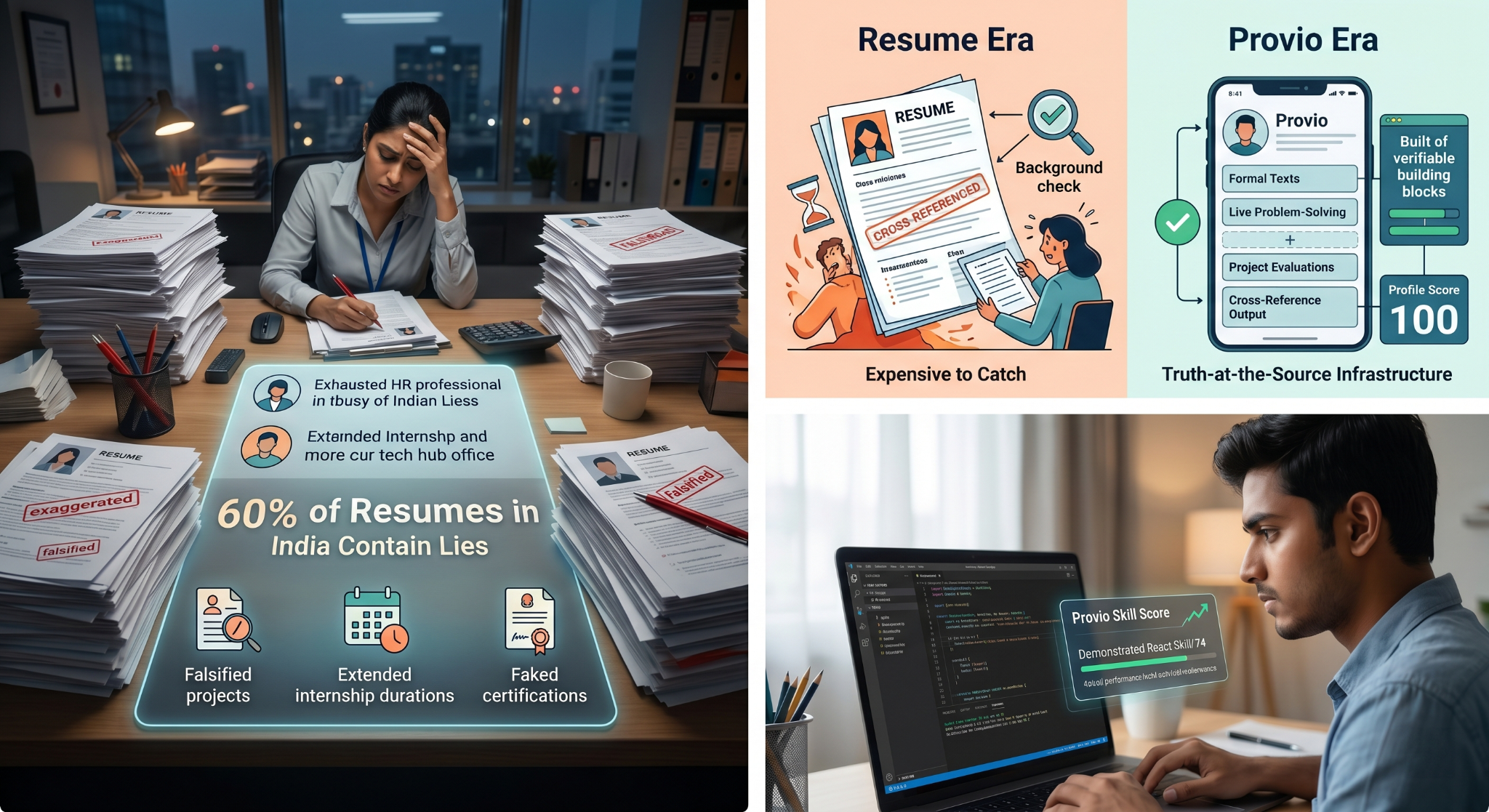
In India, resume fraud is not a marginal issue. It is the default mode of operation. In background verification surveys of the Indian hiring markets, one out of every six resumes carries an exaggerated or falsified claim — a project barely touched but listed as a personal build, a six-month internship swelled to a year, a certification exam cleared through memorised dumps sitting alongside valid skills.
60%
Resumes exaggerate skills
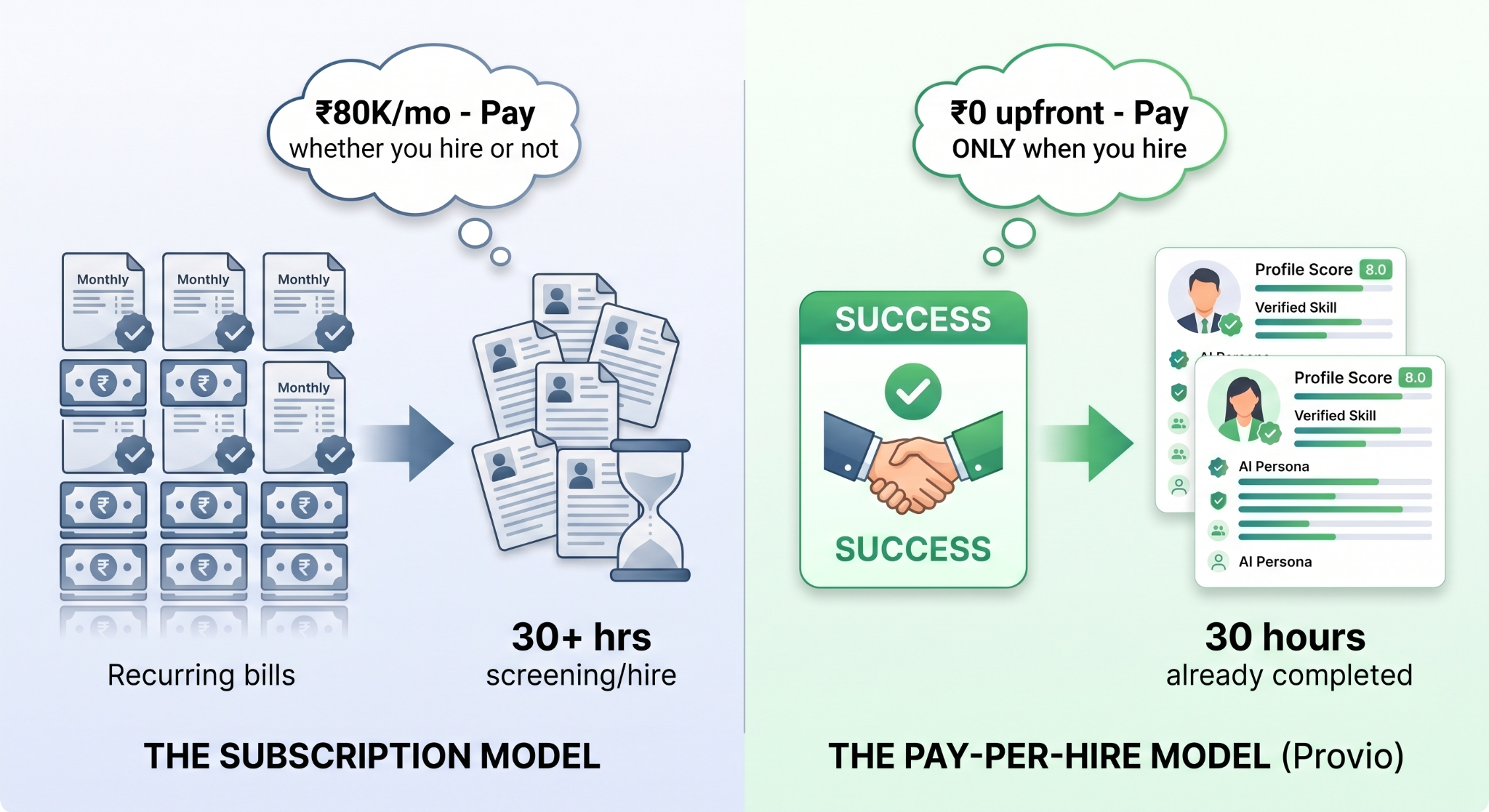
30+ hrs
Lost per hire on screening
₹15L+
Avg. cost of a bad hire
Why India Specifically?
This is driven by three structural reasons.
First, the volume problem. Indian universities produce 1.5 million engineering graduates every year, competing for fewer than 200,000 good jobs in the startup and product sector. Even honest students feel the pressure to embellish when there are seven candidates for every seat.
Second, the verification gap. In contrast to Western markets where background checks are institutionalised, many Indian startups — especially at seed and Series A — can't afford professional verification agencies. So resumes are trusted by default, and verified only when something goes wrong.
Third, the ATS arms race. Keyword density is rewarded by applicant tracking systems. A candidate who lists every tool in a job description — whether they can use them or not — scores higher than one who lists two deep skills honestly. The system itself conditions people to lie.
The resume was never built to carry this much trust. It was a paper form. We gave it the weight of a reference letter.
What Lies Are Actually Being Told?
According to background check data from Indian recruitment platforms, the most prevalent falsifications fall into four categories:
Project ownership
Claiming ownership of team projects or open-source work that the candidate cloned but did not write.
Skill proficiency
Listing tools as proficient skills after one tutorial or a weekend hackathon.
Period of employment
Filling gaps with freelance stints re-framed as formal, full-time engagements.
Certification claims
Displaying certifications that are pending, lapsed, or obtained through unverified shortcuts.
None of this is hidden. It's just expensive to catch. Most companies discover inflated claims only during a technical round — or, worse, after the bad hire has already been made.
How Provio Is Fixing This
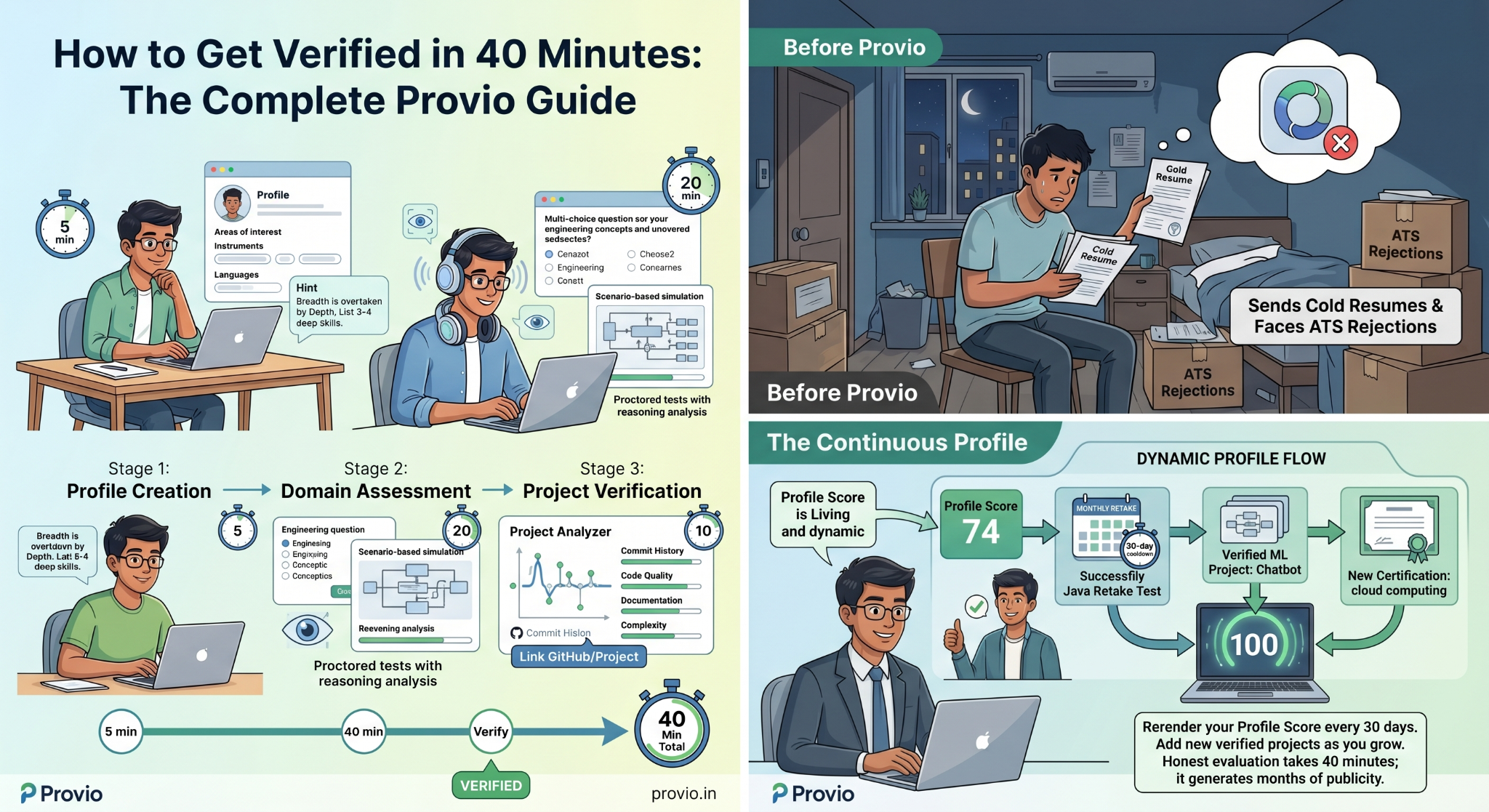
Provio is re-engineering the truth-at-the-source infrastructure of the profile itself.
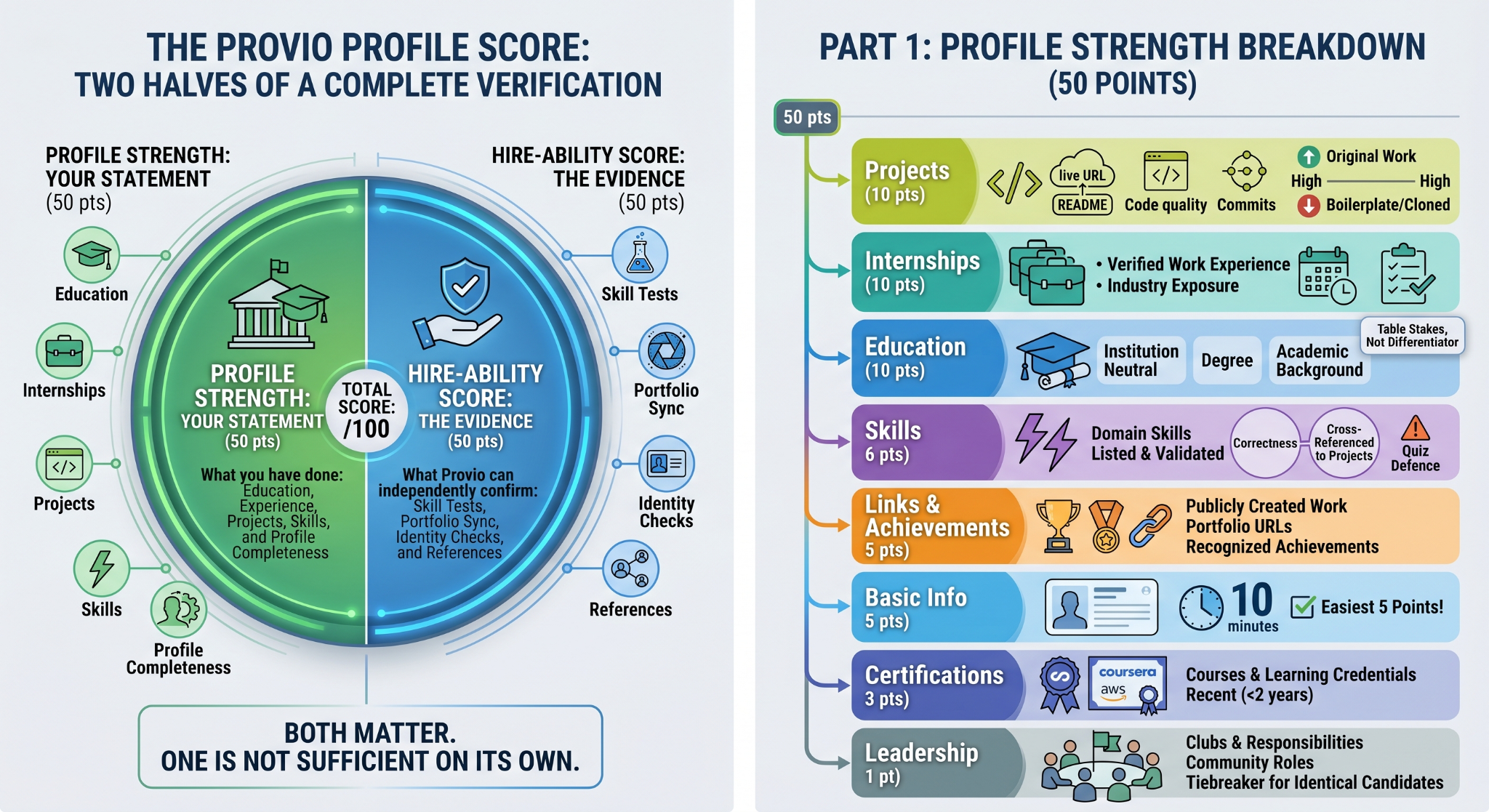
We don't ask candidates to list their skills. We ask them to demonstrate them. Every tested profile is built from formal assessments, live problem-solving, project evaluations, and cross-referenced output — not self-reporting. The outcome is a Profile Score out of 100 that reflects real, demonstrated ability.
For businesses, every candidate who ends up in your inbox has already been evaluated. You're not paying to discover who lied. You're paying to meet the people who didn't.
For students, honesty becomes an asset. A candidate who scored 74 on a verified React assessment stands stronger than an unverified one who called themselves an expert — because 74 is real, and expert is not.
Stop filtering noise. Start hiring signal. → provio.in
Written by
Provio Team
We write about verification, AI hiring, and the future of work in India. Our goal: give founders and candidates the signal they need — no noise.
More Articles